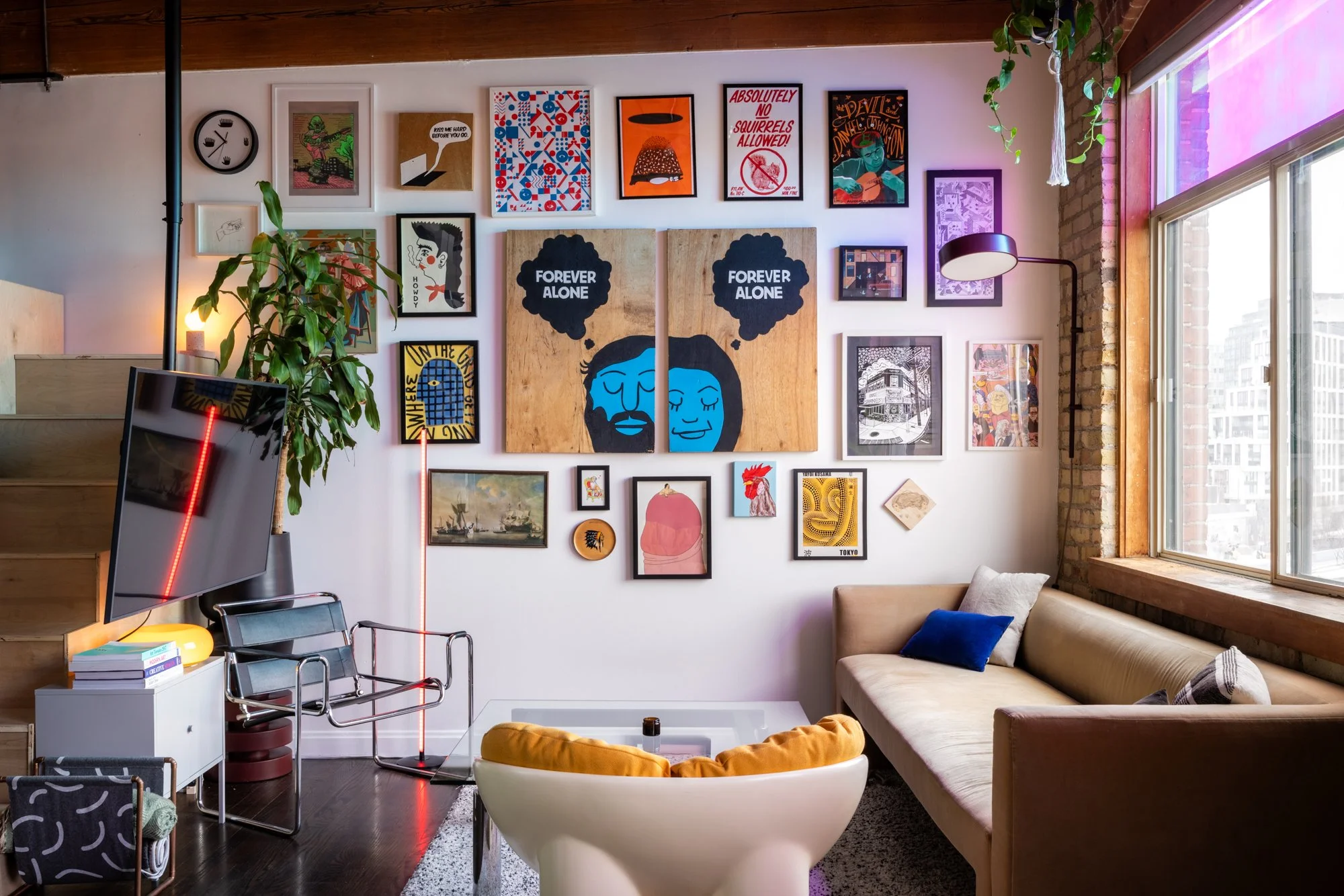
Why renting shouldn't mean compromising on style.
There's a common misconception that if you rent your home, you're limited in what you can do with it. White walls, neutral furniture, temporary solutions, and a general reluctance to make anything too personal. After all, it's not really yours, right?
I couldn't disagree more.
Whether you own your home or rent it, the space you live in should feel like an extension of who you are. It should reflect your personality, your interests, your travels, your favourite pieces of art, and all the strange and wonderful things you've collected along the way.
And you don't need to tear down walls or spend a fortune to make that happen.
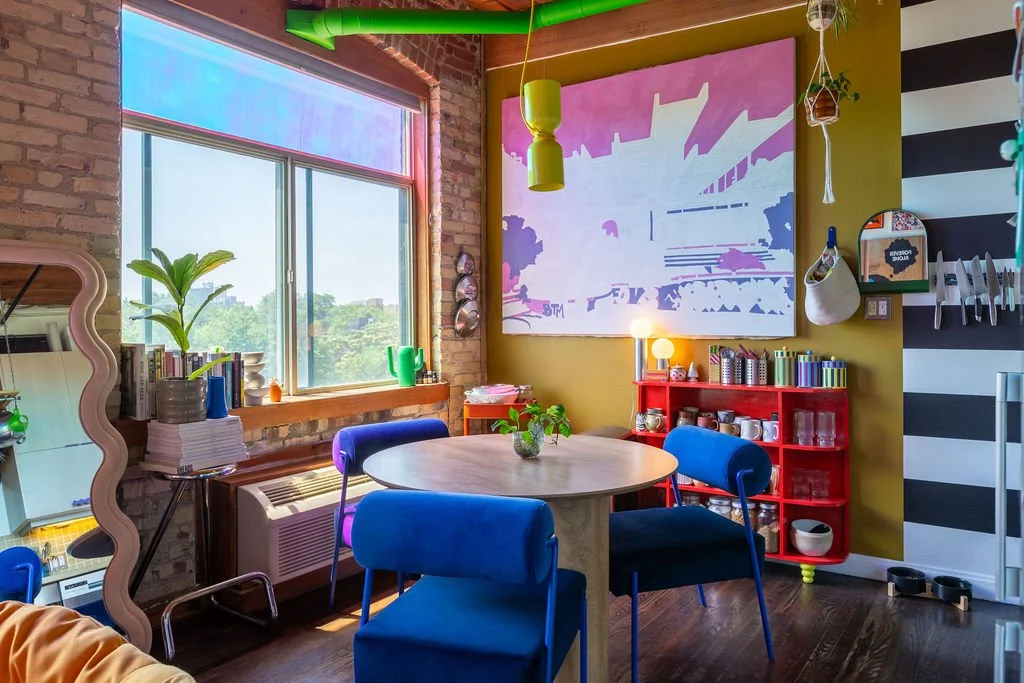
My own apartment is a perfect example. When I moved in, it was essentially a blank canvas. Beautiful exposed brick, timber ceilings, and large windows gave the space plenty of character, but it was missing personality. Through colour, art, vintage furniture, and a few unconventional choices, I transformed it into a home that feels entirely my own.
Here's how.
1. Don't Be Afraid of Colour
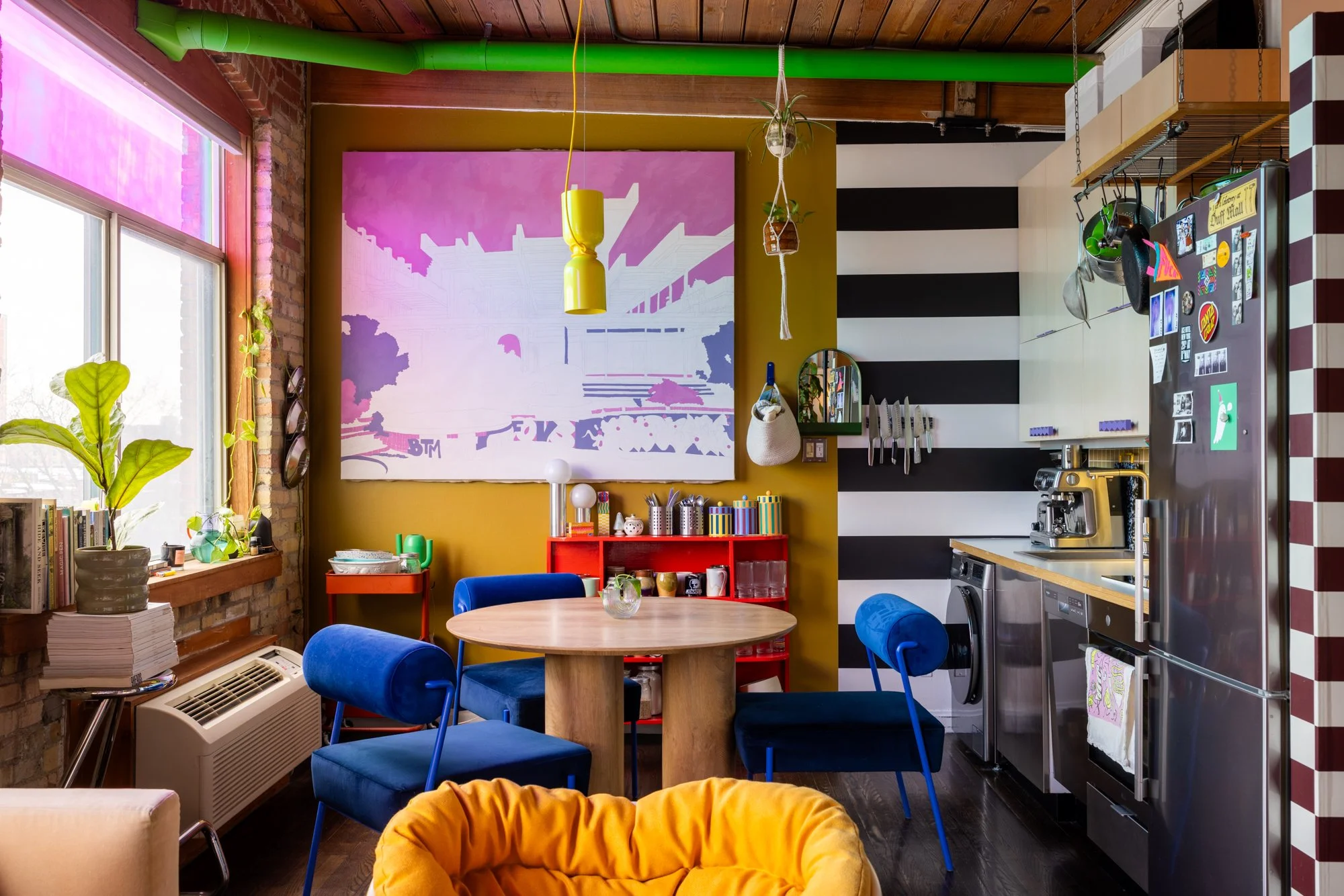
If there's one thing I wish more people would embrace in their homes, it's colour.
Somewhere along the way, we've been convinced that neutral is the safest choice, particularly when it comes to rentals. But safe doesn't necessarily mean interesting, and it certainly doesn't guarantee a space will feel warm or inviting.
Paint is one of the easiest and most affordable ways to completely change the feeling of a room.
In my apartment, I painted the kitchen wall in Turning Leaf by Benjamin Moore. It's warm, a little unexpected, and creates a beautiful contrast against the original exposed brick and wood ceiling. Rather than trying to compete with the existing architecture, the colour brings it to life.
And here's the thing about painting a rental: you can always paint it back.
Of course, check your lease and speak with your landlord before making changes. But don't automatically assume you're stuck with whatever colour was on the walls when you moved in.
A few cans of paint and a weekend of work can make an enormous difference.
2. Mix Your Furniture. Matching Is Overrated.
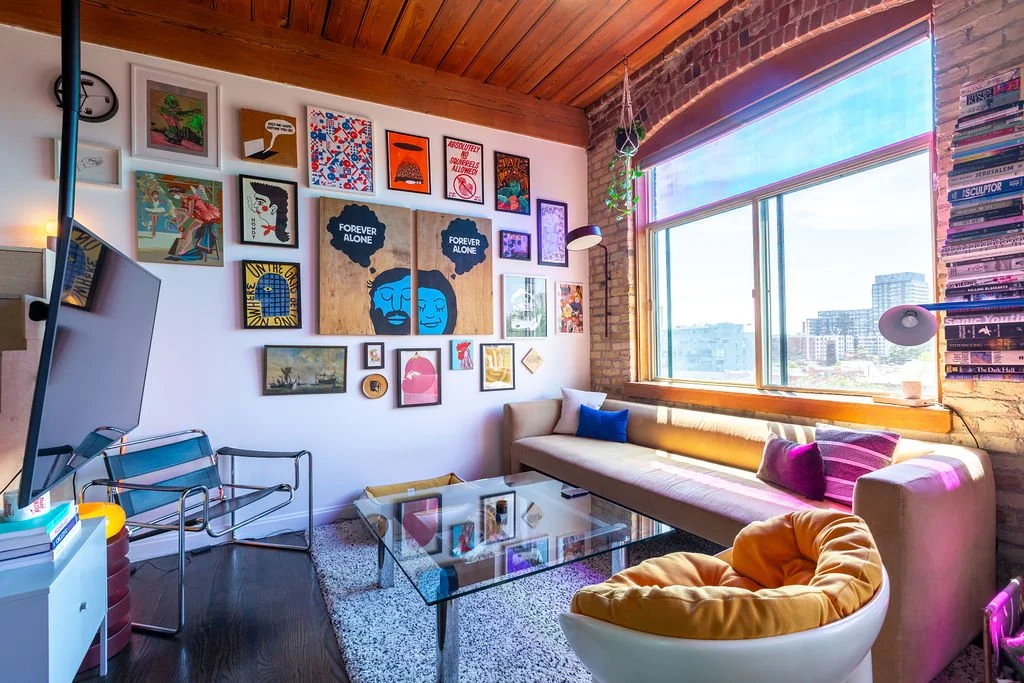
I've never been a fan of buying an entire room of furniture from the same collection.
The most interesting interiors are often the ones that feel as though they've evolved over time. A vintage chair beside a contemporary sofa. A sculptural coffee table paired with an old piece of artwork. Something expensive next to something you found at a flea market for twenty dollars.
The magic is in the contrast.
In my living room, a contemporary sofa from CB2 (discontinued) sits alongside a thrifted Wassily Chair, a sculptural Roly Poly chair, and a collection of both thrifted furniture and objects from different eras. I am also a sucker for Ikea finds. One of my favourite pieces is the PS 2026 floor lamp.
Nothing necessarily matches, but everything works together.
The key is to find connections through colour, shape, texture, or proportion. Pieces don't need to come from the same design period to feel cohesive.
In fact, I think it's far more interesting when they don't.
And for renters, furniture is one of the smartest things to invest in. Unlike a renovation, your favourite pieces can move with you.
3. Art Makes a Home Personal
If I had to choose between an expensive piece of furniture and a great piece of art, I'd probably choose the art.
Art has an incredible ability to transform a space, and it doesn't need to be expensive or particularly precious to make an impact.
My living room gallery wall is a collection of illustrations, paintings, prints, posters, and pieces I've accumulated over the years from friends art, travel finds, local artist markets and even some of my own pieces.
That's precisely what I love about it.
A gallery wall doesn't need to look like it came out of a catalogue. Mix frame styles, sizes, and mediums. Hang something unexpected. Include pieces that make you laugh, remind you of a particular time in your life, or simply make you happy.
You can combine original artwork with inexpensive prints, vintage finds, photographs, and even things that weren't originally intended to be art.
The result should tell a story about the person who lives there.
And if you're worried about putting holes in rental walls, there are plenty of removable hanging solutions for lighter pieces. For larger artwork, properly installed hooks may be the better option, with any necessary repairs made before moving out.
4. Work With the Architecture, Not Against It
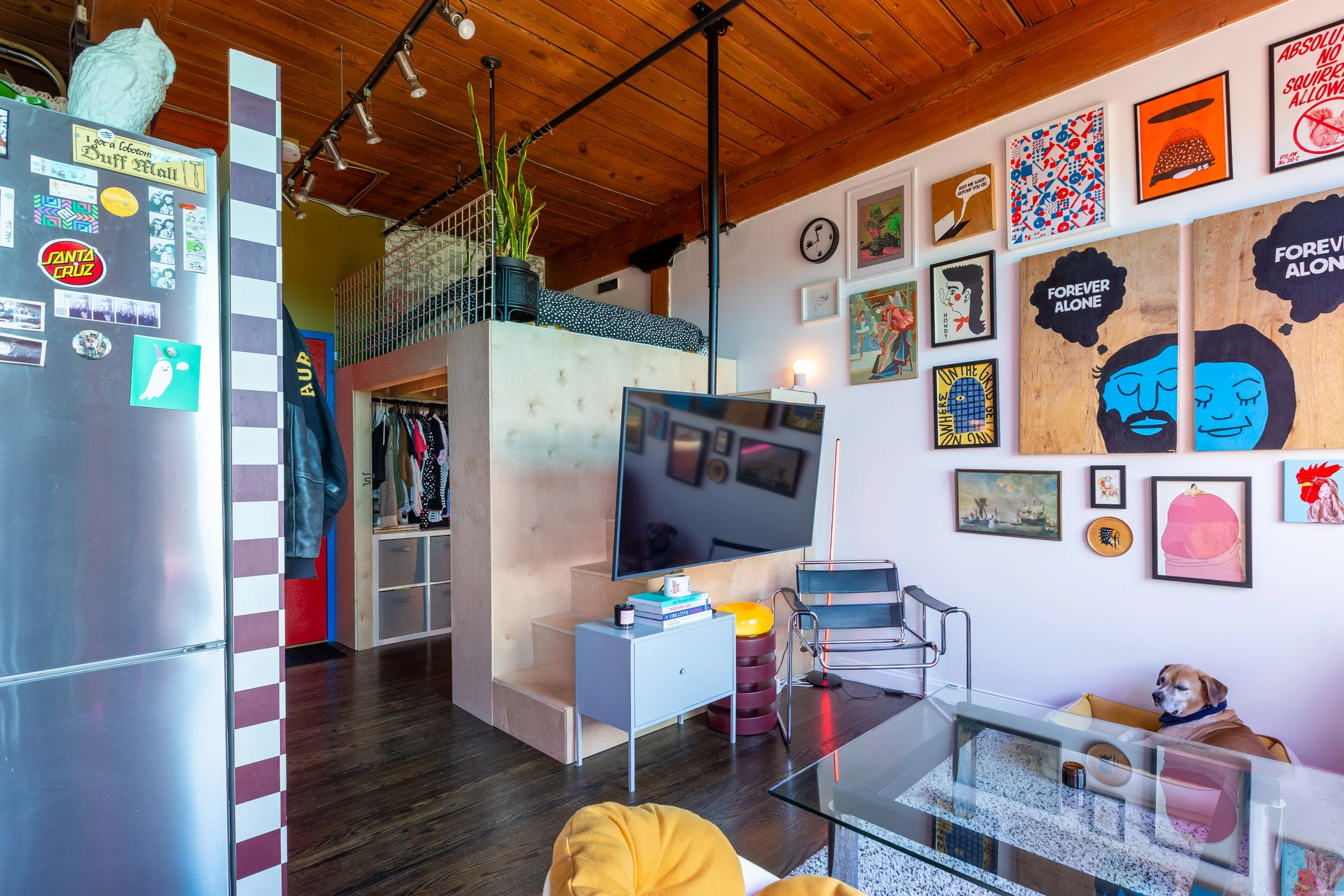
One of the first things I consider when designing any space is its existing architecture.
What makes it interesting? What should be celebrated? What can be improved?
My apartment has beautiful exposed brick walls, original timber ceilings, and large industrial-style windows. Rather than trying to disguise these features, I used them as the foundation for the design.
The warm wood and brick create a natural backdrop for bold colour, graphic artwork, and contemporary furniture.
I particularly love the contrast between old and new. Industrial architecture paired with playful, sculptural forms. Rough textures against polished finishes. Traditional materials alongside unexpected colour combinations.
You don't need to live in a converted loft to apply this approach.
Maybe your rental has original mouldings, awkward alcoves, an unusual layout, or dated architectural details. Instead of immediately trying to hide them, consider how they might become part of the design.
Sometimes the quirks are what make a space interesting.
5. Create Warmth Through Layers and Texture
A cozy home isn't necessarily one filled with beige furniture, chunky knit blankets, and neutral textiles.
Warmth can come from colour, contrast, lighting, texture, and the way different materials interact.
In my apartment, the exposed brick and timber ceilings provide an inherently warm foundation. I've layered in upholstered furniture, rugs, plants, colourful cushions, and a combination of different lighting sources as well as wallpaper. Yes! Wallpaper!. There are many removable options for wallpaper now, including my own wallpaper line flodström wallpaper.
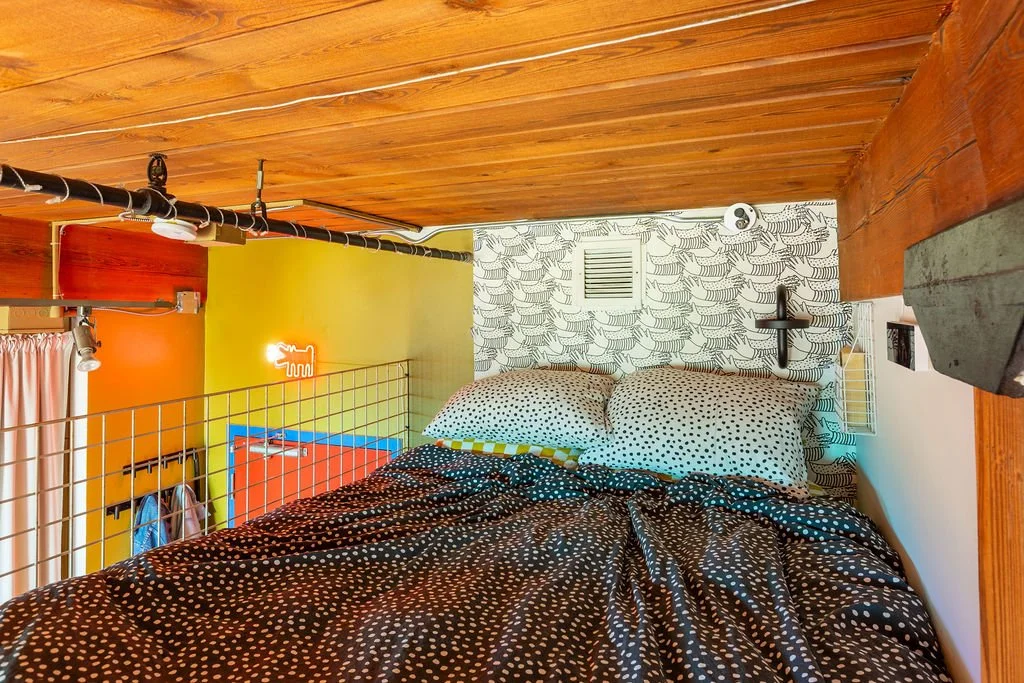
It's all about balance.
Mix hard surfaces with soft textiles. Combine natural materials with glossy finishes. Use table lamps and floor lamps instead of relying entirely on overhead lighting and mix prints. Don’t be afraid.
And don't underestimate the power of plants. They introduce an organic element that can soften even the most industrial interior.
6. Make the Most of What You Have
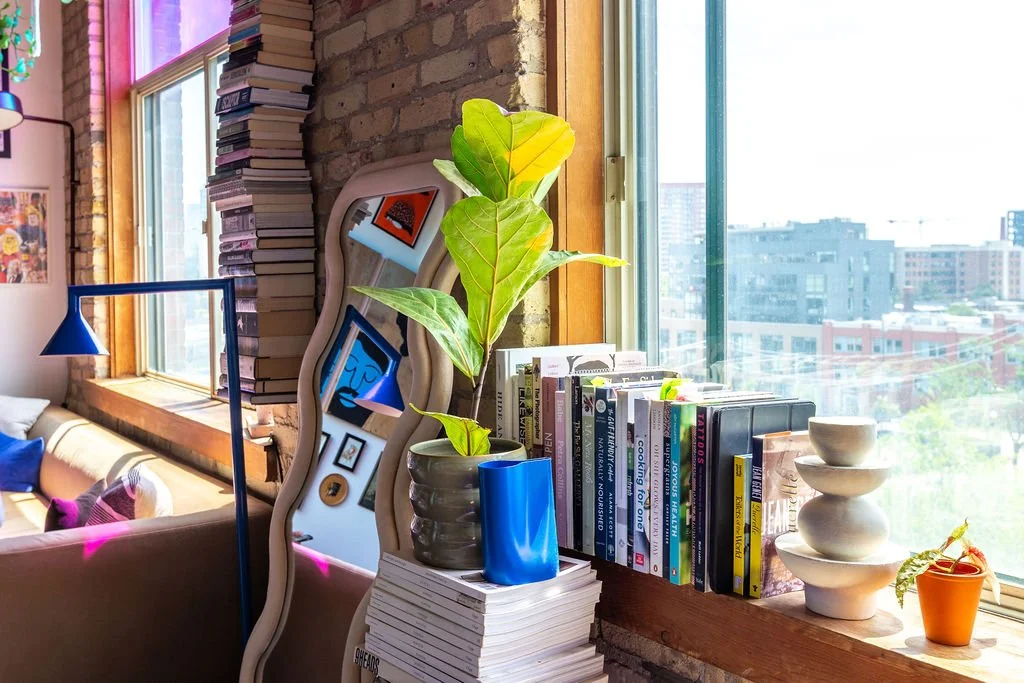
Rental renovations are often less about construction and more about creative problem-solving.
You might not be able to replace the kitchen cabinets, change the flooring, or knock down a wall. But that doesn't mean you can't dramatically change the look and feel of a space. Even something as simple as changing out the cabinet hardware can make a huge difference.
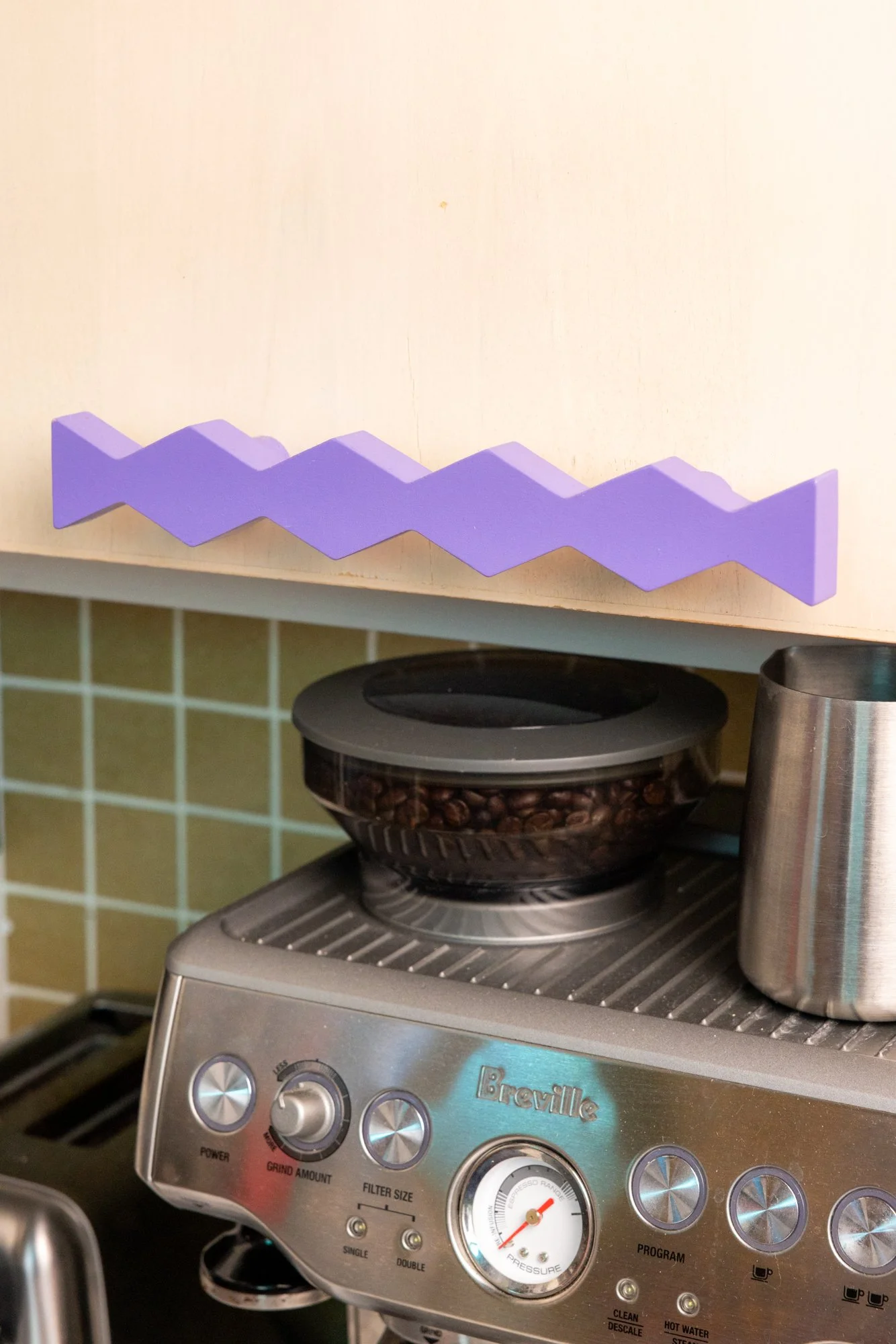
7. Stop Designing for Resale
One of the biggest advantages of decorating a rental is that you don't need to worry about resale value.
You're not choosing finishes based on what a future buyer might like. You're creating a home for yourself, right now.
So why not have some fun with it?
Paint the wall pink. Buy the weird chair. Hang the oversized artwork. Mix patterns that aren't supposed to go together.
Not every design decision needs to be practical, timeless, or universally appealing.
Some things can exist simply because you love them.
And if your taste changes in a few years? That's okay too. Interiors should be allowed to evolve.
A Home Should Feel Like You
At the end of the day, creating a beautiful home has very little to do with whether you own it.
It's about making thoughtful choices, embracing the things you love, and being willing to take a few risks.
My apartment didn't require a complete renovation to become a space that feels personal, warm, and full of character. It took colour, art, an eclectic collection of furniture, and a willingness to experiment.
I think the best interiors are the ones that don't follow a formula. They're layered, a little unexpected, and full of personality.
Because the most interesting homes aren't necessarily the most expensive or the most perfectly coordinated. They're the ones that have something to say.
And you certainly don't need to own the walls to make a statement.
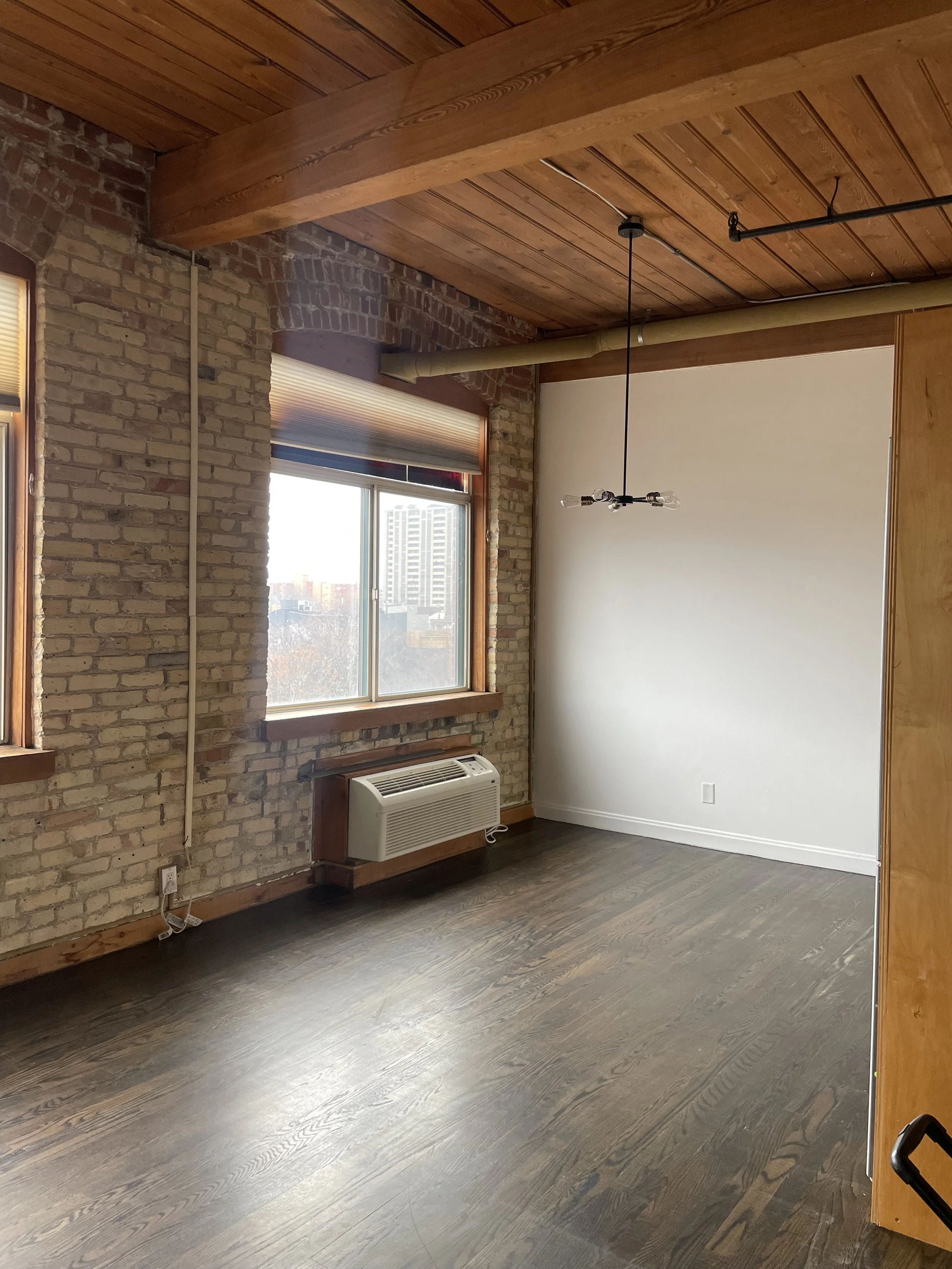
Before & After
Flodström Interiors is a Toronto-based multidisciplinary design studio creating interiors with a point of view. From residential spaces to restaurants, cafés, and creative workplaces, the studio embraces colour, contrast, and unconventional design.